The Skills Coach: AI raises the bar. EI is how you clear it
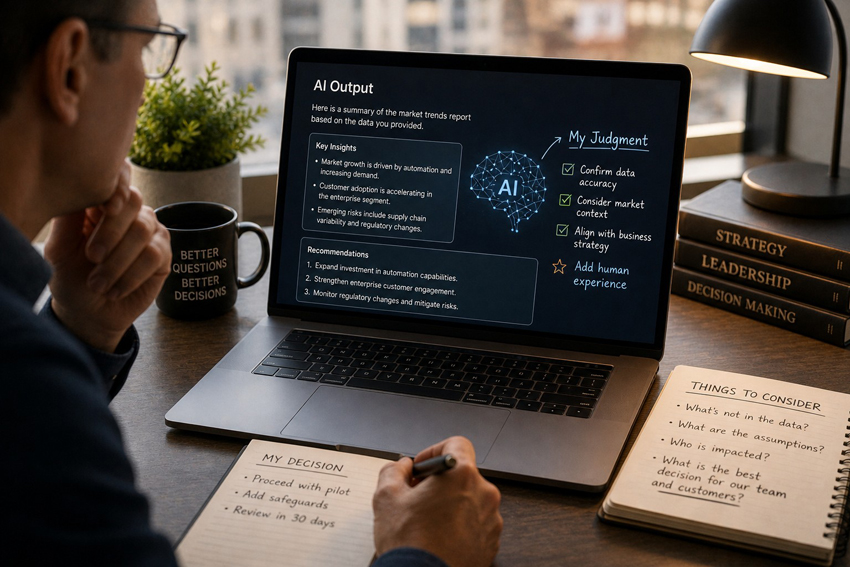
The Skills Coach: AI raises the bar. EI is how you clear it
By Lori Berman
Lawyers, especially those early in their careers, are getting mixed messages about artificial intelligence.
Use it to produce better work … but don’t rely on it to think for you.
Use it to move faster … but don’t get it wrong.
Use it to elevate your writing … but make sure it sounds like you.
The reality is that firm leadership and partners are still forming their own views on what appropriate AI use looks like.
In a recent survey we conducted of junior and mid-level associates, responses reflected a patchwork of firm policies, client restrictions, and evolving use cases. Many firms strongly encourage AI use. But even within the same firm, expectations can vary depending on the matter. This leaves lawyers to exercise judgment in real time. And while many associates said their firms provided formal AI training, just as many said that they learned on their own from experimentation, online resources, and peers.
That’s the environment many lawyers are operating in now. At the same time, across jurisdictions, competence obligations are increasingly being interpreted to include a basic understanding of the tools lawyers use. And while much of the focus has been on junior lawyers, this is a learning curve across the profession.
What’s missing isn’t more information about AI tools. It’s clarity on what competence looks like.
AI doesn’t lower the bar. It raises it
My last column was about emotional intelligence (EI), the ability to understand and manage your emotions and to respond effectively to the emotions of others. EI is a differentiator in legal careers.
Some see EI and AI as opposites: One human, one machine. I see them as inseparable. Because the lawyers who will use AI best aren’t just the ones who understand the technology. They’re the ones who bring judgment, self-awareness, and the ability to read a situation to every interaction with the technology. Basically, humans must collaborate with AI.
1. Prompting is now a core professional skill
A clear signal from our survey data is that prompting isn’t a technical skill – it’s a thinking skill. We’ve long trained lawyers to write clearly and research effectively. Prompting now sits alongside those skills.
It shows up in everyday work: Summarizing a complaint, drafting discovery requests, cleaning up a client email, conducting legal research, and even writing billing narratives. The difference between a generic output and a useful one is less about the tool. It’s how the lawyer approaches prompting and iteration.
As one associate put it: “The more effort expended on the front end to create a good prompt/incorporate AI into my workflow, the better the final result.”
Strong lawyers don’t just ask AI for answers. They refine, adjust, and build toward something usable.
2. Judgment matters more, not less, when AI is involved
If prompting is how you generate the output, judgment is how you decide what to trust.
Several associates in our survey flagged similar concerns: They want more training on when AI is most efficient, how to better prompt it, and how to decide when AI is right and when it isn’t. Because the risk isn’t that lawyers will refuse to use AI. It’s that they will use it without enough scrutiny.
AI can fabricate sources that don’t exist. It can miss critical details buried deep in a document. And because every output reads with the same polished fluency, there’s no built-in signal telling you when it’s on solid ground versus when it’s hallucinating.
As one associate put it: “I think the biggest piece of training that should be stressed is how to challenge the AI output (when do you need to continue research, when should you question the results?)”
Used well, AI is a powerful thinking partner, but you cannot delegate away good judgment. The lawyers who stand out will verify before relying, spot what’s missing, and know when to push back. That’s true for junior lawyers and just as relevant for senior lawyers reviewing AI-assisted work. Because the work product is still yours.
Finally, judgment isn’t only about evaluating what AI produces. It’s also about what you feed into it, including whether client data belongs in a third-party model, and who else might have access to that input.
3. When you use AI matters as much as how you use it
There’s a sequencing question that few people are talking about.
If you go to AI before doing any initial thinking, you risk anchoring on its answer – whether or not it’s the best one. We see a similar dynamic in group brainstorming: When people don’t think individually first, the quality and range of ideas tends to drop. The same can happen here.
AI can expand your thinking but only if you’ve done enough of your own to evaluate and challenge what it produces. In some cases, starting with AI helps you get oriented quickly. In others – especially where judgment or strategy matter – it’s worth pausing first.
The point is not the tool. It’s the sequence.
4. A new expectation: managing up on AI
In many cases, the person assigning or reviewing your work doesn’t have a fully formed view on AI either. Which means lawyers aren’t just using the tool; they’re helping to shape how it gets used, upward and across teams.
That requires communication. Not over-explaining but being intentional. In some firms, disclosing AI use to the assigning lawyer (and in some cases the client) isn’t just good practice, it’s required.
Whether or not it’s required, a few words that signal judgment can go a long way: “I used AI for an initial pass, then validated from there.” “AI helped with structure, but I handled this section manually given the nuance.” “Would you prefer I approach this with AI or without?”
These moments don’t just align expectations, they demonstrate judgment, self-awareness, and an ability to read the situation.
And yet, many lawyers are still navigating this in real time. One associate told me, “Sometimes I use AI to get started, but I wouldn’t say that upfront unless I know how the partner feels about it.”
That hesitation is understandable. But it also highlights the gap. In a profession built on judgment, using AI without communicating your judgment is a missed opportunity for junior and senior lawyers alike.
5. AI doesn’t change the need for credibility, it accelerates it
At its core, this isn’t about technology. It’s about how lawyers build trust.
The lawyers who stand out (at any level) won’t be the ones who use AI the most or avoid it entirely. They’ll be the ones who use it thoughtfully, communicate about it clearly, and exercise the judgment to know when it helps and when it doesn’t.
And judgment—how you think, how you communicate, how you read the situation—is where emotional intelligence shows up in practice.
That’s what builds trust. And in this environment, that’s what will set lawyers apart.

Lori Berman
Lori Berman, Ph.D., is an organizational psychologist and Vice President of Learning at Legal Innovators, a talent management solution for law firms and corporate legal departments. She is co-author of Accelerating Lawyer Success: How to Make Partner, Stay Healthy, and Flourish in a Law Firm. Reach her at [email protected].
Share this story, choose a platform

Brought to you by BridgeTower Media
Free Weekly Newsletter
Recommended content

Confessions of a Legal Recruiter: Using the realization rate to gauge an attorney’s value to a firm
Confessions of a Legal Recruiter: Using the realization rate to gauge an attorney’s value to a firm By Shari Davidson [...]
Simple and productive AI projects for small firm lawyers
These tasks can familiarize you with digital tools and improve your firm’s customer service without compromising client confidentiality. Read more [...]
Senior partners should listen to junior associates
Sometimes, the lawyer in the room with the best ideas is the one with the least impressive title. Read more [...]
The law of diminishing returns and legal marketing
A law firm can reach the point where more spending on marketing will not translate into more business. Read more [...]